|
|
|
|
|
|
|
|
|
|
Member: |

|
|
|
|
|
|
|
|
|
|
|
|
“Many people think excitement is happiness.... But when you are excited you are not peaceful. True happiness is based on peace.”
― Thich Nhat Hanh, The Art of Power |
|
|
 |
|
 |
|
|
|
|
|
|
|
|
|
Malas - Tibetan Rosary >> Conch Shell
|
|
|
 |
|
Please contact us to verify availability. 1-626-354-6228
Email: zambalallc@gmail.com
America area customers can view on this website first.
https://FlyingMystics.org/ |
|
|
|
|
|
|
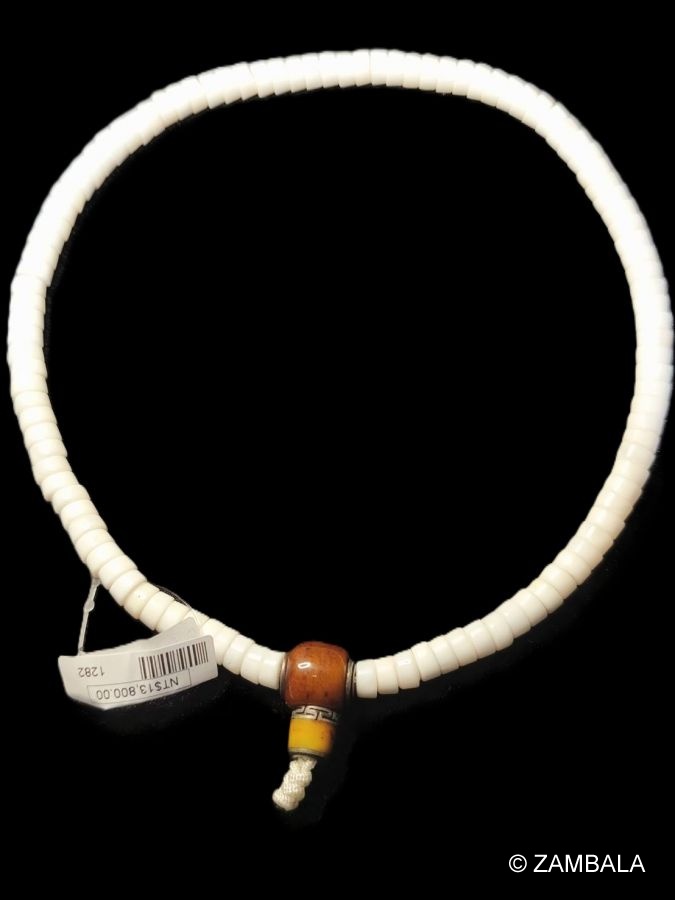
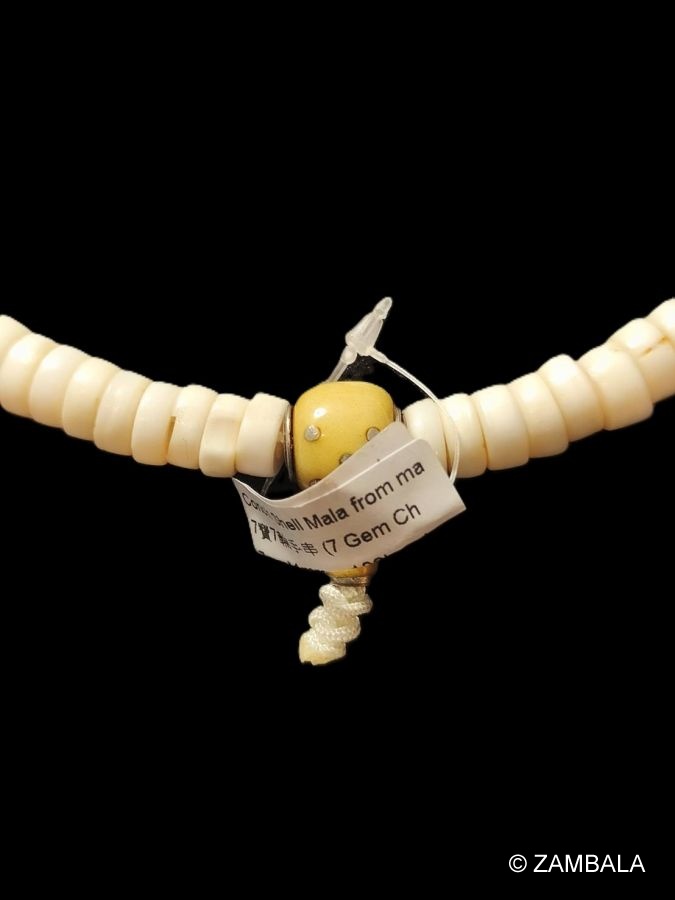
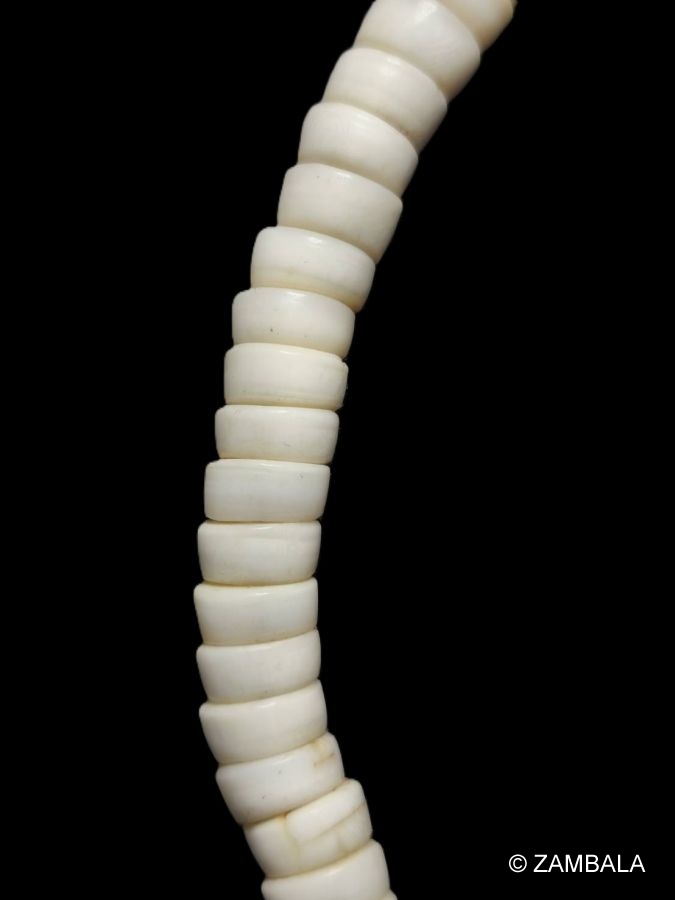
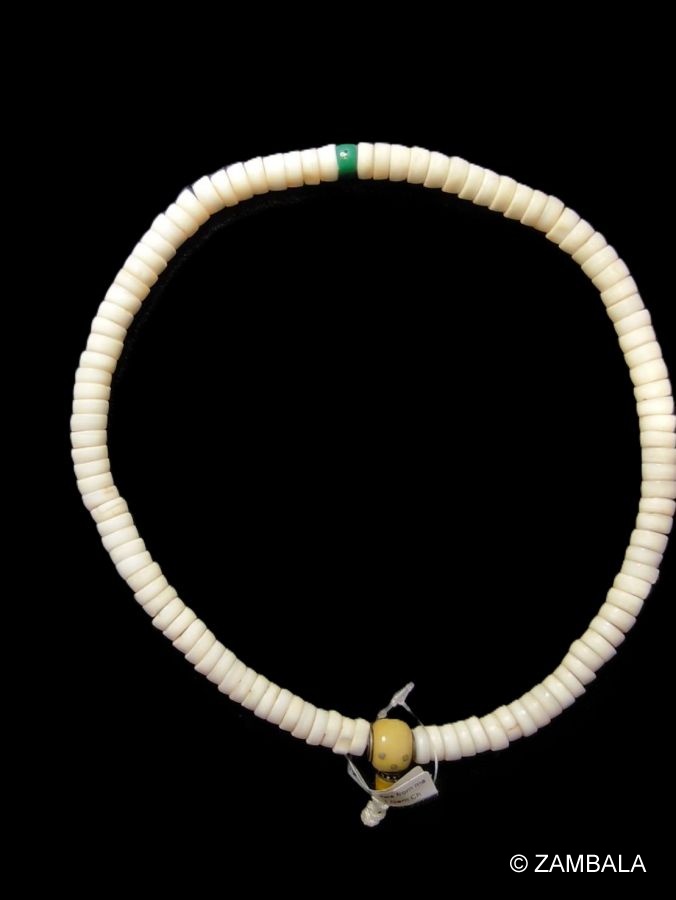
Material: Tridacna gigas, clam shell, bodhi root bead head, rosary
Size: 7mm*4mm / 108 beads + GB
Description: The Origin of Tridacna Gibbon Rosary
Tridacna gigas (scientific name: Tridacna gigas) is a large sea clam that lives in the tropical waters of the Indian and Pacific Oceans. Its inner shell has a beautiful pearly luster and was anciently known as "tridacna jade" or "tridacna shell." In Buddhism, tridacna gigas, along with mother-of-pearl, agate, coral, amber, lapis lazuli, gold, and silver, is listed as one of the "Seven Treasures of Buddhism" (mentioned in the Lotus Sutra and the Amitabha Sutra), symbolizing "purity, undefiledness, and rarity."
The history of tridacna shell prayer beads can be traced back to:
- Early Buddhist period in India (approximately 3rd century BCE to 5th century CE): Monks at that time used various natural materials to make prayer beads, and tridacna shell, due to its pure white color, delicate texture, and cool touch, was considered an excellent material for mantra recitation.
- Introduced to Tibet with Buddhism (7th-8th centuries): Tibetan Buddhism particularly valued tridacna shell, regarding it as a sacred object blessed by the "Great White Umbrella Goddess," capable of strengthening protectors and eliminating karmic obstacles.
- Introduced to China during the Tang Dynasty (7th-9th centuries): Chinese Han Buddhism began to use tridacna shell prayer beads extensively. Tangmi (Eastern Esoteric Buddhism) especially revered tridacna shell, considering it one of the manifestations of "Vairocana Buddha."
To this day, in Southeast Asia (Thailand, Indonesia), Sri Lanka, Tibet, and Han Chinese temples, ancient hand-polished tridacna shell prayer beads can still be seen.
Usage and Holding Methods
1. **Common Sizes**
- Tibetan Buddhism: Common sizes include 14, 18, 21, 27, and 108 beads (108 beads are the most common).
- Han Chinese Buddhism: Common sizes include 18, 27, 54, and 108 beads (18-bead bracelets are the most popular).
- High-end prayer beads are often paired with spacer beads made of turquoise, coral, dzi beads, amber, etc. The mother bead (Buddha head) is often carved from tridacna shell into a lotus flower or Buddha image.
2. **Special Holding Methods**
- Hold the beads in the right hand (Tibetan tradition, symbolizing "skillful means").
- Recite a mantra silently with each turn of the bead (Six-Syllable Mantra, Avalokiteshvara Mantra, Great Compassion Mantra, etc.).
- Tridacna shell is considered to have a particularly strong ability to "absorb negative energy," therefore, after reciting mantras, it is often washed with clean water, recharged with sunlight or moonlight, and then blessed by wiping with saffron water.
- In Tibetan Buddhism, when practicing the "Great White Umbrella Goddess Practice" or "White Tara," pure tridacna shell prayer beads must be used, as it is believed to enhance the blessings of "white light protection."
3. **Daily Offering Methods**
- Do not place them casually on the ground or in your pocket (considered as being of the same level as a Buddha statue).
- Place them beside your pillow or on an altar before sleeping, wrapped in red or yellow cloth.
- Cleanse regularly with milk, saffron water, or sandalwood water (traditional purification method).
Profound Influence on Buddhism
1. **Symbolic Meaning**
- The pure white of tridacna shell symbolizes "pure mind" and "innate enlightenment," echoing the doctrine of "inherently pure Buddha-nature."
- In the Avatamsaka Sutra, it is listed as one of the Seven Treasures, representing "adornment with merit and virtue."
2. **Practical Aspects of Dharma Practice**
- Tibetan Buddhism: Considered a precious "enhancing Dharma," especially in the Nyingma and Kagyu schools, tridacna shell prayer beads are often passed down to disciples as blessed objects by lineage masters.
- Japanese Shingon Buddhism (Eastern Esoteric Buddhism): Tridacna shell prayer beads are one of the important ritual implements for practicing the "Vairocana Buddha Dharma."
- Pure Land Buddhism (Chinese Buddhism): Many elderly lay practitioners regard 108-bead tridacna shell prayer beads as a positive influence for "rebirth in the Pure Land of Ultimate Bliss."
3. **Traditional Medical and Energy Perceptions**
- Traditional Chinese and Tibetan medicine believe that tridacna shell is "cold in nature," capable of clearing heat and detoxifying, calming the mind and stabilizing the spirit. Long-term wear can improve problems such as high blood pressure and excessive heart fire.
- Many eminent monks (such as the 16th Karmapa and Master Chin Kung) have taught that tridacna shell prayer beads have a special power to "subdue demonic obstacles" in the degenerate age.
In summary, tridacna shell prayer beads are not only tools for Buddhists to chant mantras, but are also regarded as "carriers of blessings from Buddhas and Bodhisattvas." Their pure texture and rarity make them one of the most revered prayer bead materials throughout the Asian Buddhist cultural sphere. Even today, in Lhasa's Barkhor Street and temples around Bangkok, Thailand, one can still see devotees queuing to purchase tridacna shell prayer beads blessed by high-ranking monks, demonstrating their enduring influence.
|
|
|
 |
|
|
|
|
|
© 2026 Zambala inc. All Rights Reserved. No part of this site may be reproduced without our written Permission.
Service Mail: ZambalaLLC@gmail.com
Phone: (626) 289-9787 or 1(888)Zambala (926-2252)
Fax: (626) 289-9719
1904 West Valley Blvd. Alahambra, CA 91803 USA
Unless stated otherwise in content's license. Design By
|
|
|